

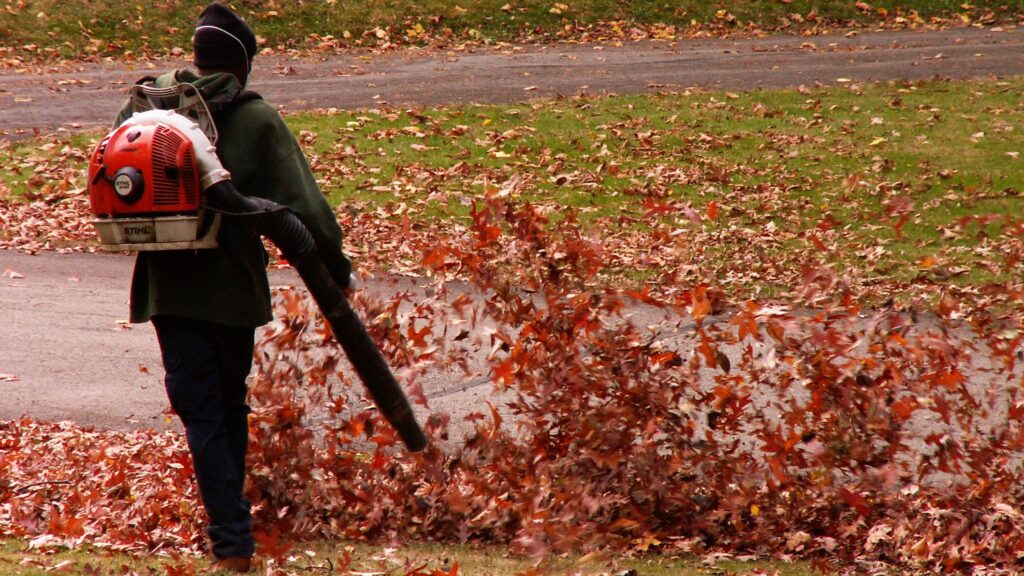
A noisy night in St. Thomas could cost a lot more under a plan going to city council.
City staff are recommending a new Noise Control By-law to replace the one council passed in December 2020. Council gets the report at its meeting tonight, Monday, October 5th, at 5pm.
The biggest change for most people is the price of a ticket. The current by-law lists set fines of $100 to $200. The new one would set most of them at $500.
What would cost $500
The report lists seven tickets. Six of them would be $500:
- squealing your tires
- noise from a stereo, TV, speaker or musical instrument that can be clearly heard on someone else’s property
- persistent yelling, shouting, whistling or singing
- construction noise at a time it is not allowed
- noise from home projects at a time it is not allowed
- running garbage trucks or compactors at a time it is not allowed
A dog or other pet that keeps barking, calling or whining would be a $250 ticket.
The current by-law lists $150 for noise likely to disturb people, $100 for things like squealing tires, and $200 for noise at a time it is not allowed.
The report says $500 was picked “to promote consistency, fairness, and ease of enforcement.” It says a single fine “supports deterrence” and lines up with fines in “comparable municipalities,” but it does not name them. The new fines would only take effect after a senior justice approves them through Ontario’s Ministry of the Attorney General.
The quiet hours stay the same
The hours for power tools and construction match the ones in the current by-law for residential areas. You cannot run construction equipment, or power tools for your own home projects, during these times:
- Monday to Friday, 9pm to 7am
- Saturday, 9pm to 8am
- Sundays and statutory holidays, 8pm to 9am
That covers lawnmowers, leaf blowers, hedge trimmers, chainsaws, drills and saws, whether they run on gas, battery or electricity. Snow removal is allowed.
Garbage trucks and compactors are not allowed from 9pm to 7am. Loading and unloading is not allowed from 11pm to 7am, unless it is for essential services or someone moving their own household belongings.
One new rule is about heat. When Southwestern Public Health has a heat warning in effect, construction crews could start up to one hour earlier. Building Services asked for it to protect workers. The health unit has issued four heat alerts in 2026, covering 13 days.
No more measured sound limits
The current by-law sets sound level limits for some noise, such as air conditioners and other equipment that stays in one place. Those limits can only be checked with special meters. The new by-law drops them.
Officers already judge whether a noise is likely to disturb people and is clearly audible on someone else’s property. With the limits gone, the draft says that judgment comes down to the officer’s opinion.
The report says dropping the limits saves money. Checking them would mean buying two meters, training six staff for five days, and paying for yearly calibration. Staff put that at $26,393.62 in the first year and $2,400 a year after, before taxes and any tariffs.
The draft also says what “persistent” means: a noise heard or felt continuously for ten minutes or more. That test would apply to yelling and to a pet that won’t stop barking.
Other changes
Written orders to stop a noise are not new. What the draft adds is an Order to Comply that can tell an owner to fix the problem. If the owner does not do the work, the City could do it and add the cost to the property tax bill.
Street parties and events in City parks would go through a Special Event Permit. People who want an exception on private property, such as a late-night concrete pour, would still ask council, at least 90 days ahead. The report says council has had only one of those requests so far, for concrete pouring at the Alma College site.
For cases that go to court instead of a ticket, the draft allows a fine of up to $50,000 for a first conviction. The current by-law sets the limit for an individual at $5,000.
What happens next
The report asks council to receive it and to have the new by-law “brought forward for Council’s consideration.” The by-law is not on tonight’s list of by-laws to be passed, so it would come back later for a vote.
The report comes from Dan Smukavich, the City’s Manager of By-law Enforcement and Animal Services. In a second report on the same agenda, Smukavich asks council to approve, in principle, a new way of handling by-law tickets. Under that system, people would dispute a ticket with City-appointed officers instead of in provincial court. Staff would bring back a draft by-law with the details and penalty amounts first.
Sources: Report CC-20-26, Noise Control By-law (October 5, 2026) · Draft Noise Control By-law · Current Noise By-law 160-2020
By Anthony Zruna · About the LocVox Newsroom

Before you go
You read a local story to the end, so St. Thomas news matters to you. Once a week I gather the whole week into one Friday email: top stories, the weekend forecast, what council decided, what police logged, and what's on this weekend. Free, and one click unsubscribes you.
Send me Friday's newsletter